
 Soho
November 4, 2025
Reviewed by Barbara Fister
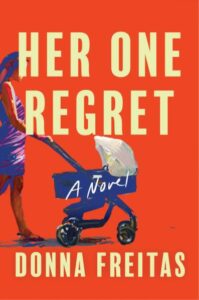
Years ago the advice columnist Ann Landers announced the shocking results of an informal poll that asked her readers: If you had it to do over again, would you have children? Some seventy percent of the ten thousand respondents said no. Fifty years on, at a similarly fraught time in America as gender roles shift and consensus seems impossible, Donna Freitas takes on the taboo subject of regretting motherhood. In her suspenseful novel, three mothers navigate life while caring for infants. As the novel opens, one of them has vanished from a store parking lot, leaving her car, phone, groceries, and a wailing baby behind. Was Lucy abducted, or did she simply walk away from a life that had become unbearably oppressive?
The woman’s best friend Michelle happened on the scene shortly after her disappearance. She’s certain something terrible has happened, and as the days pass without Lucy being found she insists it has to be an abduction. Lucy would get in touch if she could. But Michelle also has a terrible secret. Lucy had told her one evening that she regretted becoming a mother and fantasized being kidnapped so she could escape. When the secret spills out, public opinion shifts, vilifying a woman who was monstrous enough to feel trapped when she should naturally want to nurture her baby.
A third woman, Julia, follows the scandal closely. She set aside her career as an artist when she reluctantly bore a child, something her husband wanted more than she did. She’s wrestling with her own feelings of despair and entrapment and understands the urge to escape. Yet she’s also suspicious of her creepy neighbor, the one who stares at her with spooky eyes and makes trips to his shed in the middle of the night. Could he be holding Lucy captive? The cast is rounded out when a retired detective, Diana, gets intrigued by the case that reminds me of women’s disappearances she investigated in the past.
Described as a “feminist thriller,” this novel explores the subject of motherhood and the demands it makes on women, not just in terms of what it takes to care for a baby, but the expectation that mother love will overcome all the sacrifices a woman makes. In some ways, Lucy, Michelle and Julia have a privileged life. They can afford to stay home with their babies, they don’t seem worried about making the rent or paying their mortgage, they have caring husbands. But the men in the story are mostly absent and almost entirely clueless. (Julia’s college professor husband, after weeks of coming home late, makes an effort to give his unhappy wife a romantic evening but ruins it by saying he’s recreating the night when their child was conceived – a happy memory for him, a disaster for her.) The atmosphere is claustrophobic and saturated with emotion as the women each wrestles with their conflicted feelings and the wider social conversation condemning women like them, who love their children but find motherhood a challenge, and in some cases an impossible burden.
This is not the first mystery to explore these themes, though it is far more focused on the politics of motherhood than Jane Harper’s The Exiles, which also featured a baby abandoned by a mother whose motives are debated. This thriller combines the lonely and exhausting experience of caring for babies with a pointed commentary on social expectations of women; the mystery is woven in skillfully, but it is the emotional turmoil of the three main characters and the pressures they feel that takes center stage.
Fifty years ago, it was a shock to learn many parents wish they hadn’t had children. Today, not much has changed: Women have made strides in the workplace, largely because they need to work for wages, but they still perform the lion’s share of housework and child care. Politicians scold women who choose not to have children and “tradwife” influencers portray motherhood as a blissful, even spiritual lifestyle. The conflict between expectations and women’s actual experience continues. Freitas has used that collision as the theme of a thought-provoking novel that might be a difficult read for women experiencing fertility challenges, or for expectant parents worried about the challenges ahead, but it’s sure to lead to intense book club discussions.