
 Grand Central
Published July 7, 2026
Reviewed by Meredith Frazier
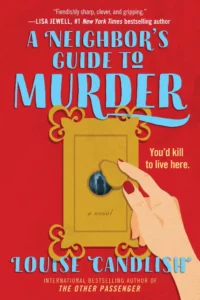
Truth can be slippery, and Louise Candlish proves it time after time in her novel A Neighbor’s Guide to Murder, keeping the reader questioning the truth of events from the beginning of the book to beyond its final words.
The novel’s prologue sets the tone, telling right up front that there’s been a murder, but identifying neither victim nor murderer, leading to assumption after assumption as the story unfolds. In fact, it takes the rest of the book to discover who was murdered and why, and it is both the questions and the assumptions that propel the plot, keeping the reader guessing and making the book hard to put down.
The majority of the book is Gwen Healy’s story. Gwen is an older woman who is dedicated to doing good in the world and particularly for young women. She’s divorced and has a scandal in her past, but she lives in the rather exclusive Columbia Mansions and is lucky enough to own her apartment and not just rent it. She is thrilled when she meets Pixie, a young woman who rents a room from Alec, who owns the apartment next door to Gwen’s. Gwen and Pixie instantly hit it off, in spite of their age difference. Before long, though, Pixie confides to Gwen that she’s trading sex for rent, and Gwen is outraged that Pixie is being taken such advantage of. Although Pixie wants to keep the situation confidential, the close-knit community of neighbors soon knows the details, and the situation spirals into accusations, lies, threats, betrayal, and, ultimately, murder. Throughout the novel, where the truth lies is always in question — and is constantly questioned — leaving the reader off-balance and never entirely sure of whose story should be believed. Adding to that drama is the underlying unease about how so often the best of intentions can lead to the worst possible outcomes and how choices can have lingering — and unintentionally damaging — effects.
While that may sound as if A Neighbor’s Guide to Murder is a weighty tome, it’s not. It’s told in a very conversational tone — Gwen explains that she’s writing it as a therapeutic journal of sorts — and the characters are all very relatable. They’re even, for the most part, quite likable, in spite of all of them having at least some (and in some cases a lot) of unlikeable traits. Even the most unlikeable are interesting enough that it’s worth following their story and even believing their version of events. In fact, it’s Candlish’s artful portrayal of such psychologically relatable characters that makes the novel so compelling — and disturbing: Gwen’s actions and reactions are uncomfortably recognizable in many instances. Candlish also takes on a number of larger social issues but, again, explores them through Gwen and her neighbors in such a way that they blend seamlessly into the plot and add depth — and make a point — without being didactic or strident.
Overall, A Neighbor’s Guide to Murder is a fast read full of twists and unexpected turns that make it fun, but it is also thought-provoking, and its characters, questions, and psychology promise to give you plenty to ponder.