
 Harper
July 21, 2026
Reviewed by Barbara Fister
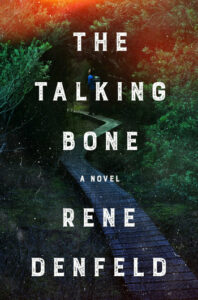
This short novel is a remarkable piece of fiction. It blends a story about the race to exonerate a wrongfully-convicted man before he is executed with a plotline about seeking patterns in countless unsolved cases of missing women and girls, adding in a touch of magical realism in the form of a bone that can talk to those who are able to listen. While this sounds like it would fill a 500-page epic, it’s all contained in only 256 beautifully written pages.
Ruby Spencer is an investigator for defense lawyers who are trying to help those on death row who may be innocent. She knows there are many people wrongfully convicted who face the death penalty, and her life is devoted to helping them seek justice before it’s too late. For Mitchell Brown, she is his last hope. He will be executed in two weeks. It won’t be an easy case for Ruby – all of the evidence apart from one video tape that hadn’t been used in the prosecution has disappeared, and finding witnesses so many years after the murder he was accused of will be difficult. But she’s good at her job, and she will give it her all.
She’s surprised to find Mitchell grew up in the same small town where her mother lived at a now-derelict workhouse. After getting a job at a shoe factory in Portland, he was given a promotion and transfer to Georgia, where he allegedly murdered a white woman after getting blind drunk. He doesn’t remember much about that night, other than that a friendly man sat beside him at the bar. Ruby sets out to track that man down as well as interview the grandfather who raised Mitchell after his mother disappeared from their small Oregon town.
Ruby’s mother also vanished. That’s why Ruby has kept track of women who have gone missing, placing color-coded flags on a map that has become crowded with cases. While Ruby criss-crosses the country to investigate Mitchell’s case, we go back in time to her mother’s childhood at the grim workhouse where she was born to an inmate who died and left her an orphan. At times, too, we visit with the sheriff in the small town where Ruby tries to pick up threads of the case, and we get to know Mitchell’s grandfather, who keeps the talking bone in a scrap of old quilt. By the time Ruby closes in on the real killer, and Mitchell grows even closer to his execution, both Mitchell and Ruby begin to hear the talking bone’s whispers.
The writing is spare but often beautiful, the plotting is tight, covering a lot of ground without padding, and the characters are vivid. The sheriff, who hasn’t always pursued justice wholeheartedly, moves “through his days in a cloud of anger, and couldn’t even say why.” It’s internalized: “If veins were brambles, his would have had thorns, his insides always pricking at him.” Ruby herself is angry at the waste and injustice she sees in policing: “The fancy cars for chasing criminals that never came, the tanks in the back for drug lords that never arrived. The lines of riot gear. All the money spent in policing that never seemed to make anyone safer.” But she doesn’t dwell on the unfairness, just throws herself into finding justice. Likewise, the author doesn’t indulge in telling us what to think, she gets on with the story which makes the point without preaching. And the talking bone, which might seem a jarring intrusion of the supernatural, becomes another thread in the tightly-woven narrative that comes together with a suspenseful conclusion that includes some sharp surprises.
The author is a death row investigator herself, anchoring a story that includes touches of magic realism in authenticity. As she has been doing that work for two decades, she has also become a talented writer. The Talking Bone, her fifth novel, is a highly accomplished work that will reward the readers who she respects enough to give them an unsentimental, taut, and complex story in an admirably streamlined package.