
 Ecco
Ecco
Published July 7, 2026
Reviewed by Rebecca Nesvet
In Winter Counts, David Heska Wanbli Weiden’s award-winning debut novel, the enrolled Sicangu Lakota writer introduced his messy hero Virgil Wounded Horse. A self-appointed enforcer on the Lakota nation’s Rosebud Reservation at the cold, desolate borderzone that divides Nebraska from South Dakota, Virgil is a small-time reservation godfather of sorts. When federal, state, and tribal systems fail the Lakota people, they ask Virgil to help, and, with increasing reluctance, he does.Until he decides not to anymore. Until the drug dealers come for his teenage nephew, Nathan. Then, unhelped by anyone else, Virgil springs to action–and Winter Counts reveals in gritty social realism how (in)justice operates on the rez.
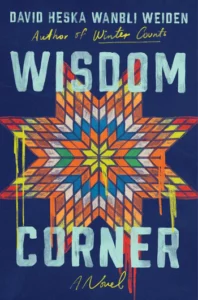
Weiden tells a similar story in Virgil’s new adventure, Wisdom Corner. The title is carefully chosen. A super sleuth, Virgil is great at gathering knowledge and not so great at having, and using, the wisdom to deploy it in the ways that he, and, even more so, his girlfriend Marie, aspiring tribal legislator, want. He has stopped drinking, stopped smoking (a huge accomplishment), and promised Marie not to use violence to solve any problems.
Virgil almost keeps his promise. What drives him to the edge begins with a conspiracy against his sort-of-friend Pudge–the least toxic of the local bootleggers, and ends with provocation from a man to whom he must serve a subpoena for domestic violence and child abuse and that man’s white goons.
As Virgil seeks the wisdom necessary to achieve justice, he also tries to unravel the conspiracy and a murder of a revered shaman. On the way, he explains to the reader how his world arose, from the horrors of the deadly forced “residential schools,” such as the one where his aunt died as a child, to nineteenth-century massacres that have never been recognized by white society and federal laws prohibiting Indigenous spiritual practice that lasted through the 1960s. Sometimes the narration seems a bit expository, begging questions about the intended addressee(s) of his narration. However, for me, a non-Indigenous reader, it was often necessary and always clarifying.
The fast-paced plot speeds on, entrenching Virgil in his community’s struggles until, like many another crime novel hero, he faces direct threats to those he loves and the dangerous persecution of the criminals he tracks. It is never predictable and always engrossing. Weiden tells powerful tales, and his far from perfect hero grounds his urgent investigation of Native American history, culture, and resilience. I look forward to Virgil’s next mission.