
 Kensington
Published June 30, 2026
Reviewed by Meredith Frazier
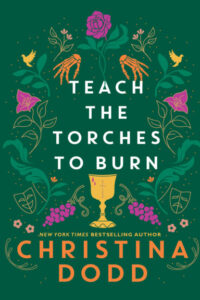
Third in Christina Dodd’s series featuring the eldest daughter of Romeo and Juliet (yes, that Romeo and Juliet who didn’t die after all), Teach the Torches to Burn is set in the days leading up to Rosaline’s wedding to Prince Escalus. Although in the previous book when Escalus tricked Rosaline into becoming his betrothed she protested much and repeatedly claimed she loved another, in this novel, the biggest mystery seems to be whether or not Rosaline and Escalus will have sex before their wedding night. A couple of murders do take place early in the novel, but they are mostly ignored for about half the book. However, as the wedding draws near, it becomes clear that a serial poisoner lurks among the many revelers, and he or she may be threatening Rosaline herself. That causes Rosaline to take a bit more interest in solving the murder mystery, which is all to the good, because the mystery is intriguing.
As with previous novels in the series, Romeo and Juliet themselves play background roles, and the story is all Rosaline and Escalus, but the supporting cast includes a number of interesting and well sketched characters. Also as with previous books, there’s a strong emphasis on humor, including asides to the reader and plenty of knowing banter. That makes the read a fun romp. Touches of life in Renaissance Verona also add a bit of interest, although the historical aspects are not heavily emphasized.
To great extent, Teach the Torches to Burn lands more in the comedy and romance camp than historical murder mystery, but particularly in the second half of the book, the mystery does propel the plot, and the means is particularly intriguing. Since Rosaline is otherwise occupied, much of the sleuthing is left to others and is merely summarized, but Rosaline plays a significant role in the unmasking of the murderer, and those scenes swerve toward much darker themes and action. The overall effect of the novel is still lighthearted comedy, but the mystery adds a welcome bit of depth, as do the portrayals of several characters, including Rosaline, who refuse to great extent to play by Renaissance society’s rules.