
 MCD
MCD
Published May 20, 2025
Reviewed by Barbara Fister
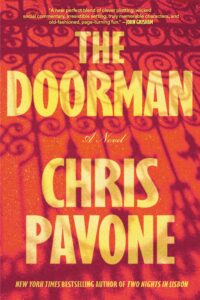
Emily Longworth and her wealthy husband live in the luxuriously renovated penthouse of a classic Upper West Side apartment building, the Bohemia. Downstairs in 2A Julian Sonnenberg, an art dealer to the wealthy, leads a more modest life style. And at the front door Chicky Diaz greets residents, sweeps the pavement, carries packages, and endears himself to the residents with his cheerful, capable demeanor.
These three characters are the DNA strands of a powerful novel that many have compared to Tom Wolfe’s Bonfire of the Vanities. It’s a scorching depiction of a fraught moment in New York – and the nation. The New York setting is a departure for the author, whose previous thrillers are set mostly in European capitals, featuring the adventures of spies and scammers. By examining three strands of society whose lives are entirely different yet intersect at the Bohemia, he captures the moment with telling details that are Balzacian in their analysis of class and the influence of money on society and individual lives.
Lest this sounds dreary, it’s not. Each of the three characters is given full play. Emily, who married a wealthy man after a job in the arts condemned her to gentile poverty, is coming to despise her husband, who is growing caught up in far right causes as he cultivates his massive wealth. She is skeptical of the performative social justice stances her wealthy peers adopt and uses a false name when she secretly travels up to Chicky’s neighborhood to work at a shelter as some sort of penance and declaration of independence. There she witnesses an incident that lights a fuse.
Chicky, who is struggling to pay off medical debt after his wife died of cancer, falls afoul of a violent man when he’s moonlighting as a bouncer and feels compelled to buy a Checkovian gun for protection. Julian is also struggling financially, and is being threatened by Emily’s husband after selling him a painting that might be a fake. And then, as the shady business that has financed Emily’s extravagant wealth is made public by a whisteblower, the city combusts after a black man is shot by police.
These stories are developed deliberately, an angry slow burn, gradually ramping up the tension until the final chapters, when the author does something he’s done before: He scrambles readers’ assumptions with a jaw-dropping twist. This is Pavone’s most ambitious and impressive novel to date and may rank as one of the best of a dramatic and contentious year.