
 Gillian Flynn Books
Published on January 13, 2026
Reviewed by Barbara Fister
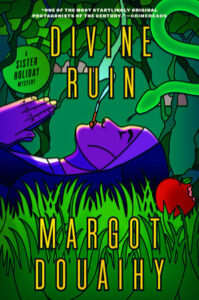
Sister Holiday is preparing to take her permanent vows of poverty, obedience, and chastity to the Sisters of the Sublime Blood when one of her students at the order’s school is found lying on the ground, unresponsive. While it’s impossible to believe that Fleur, a gifted senior student, would knowingly take drugs, it turns out she has taken a fatal dose of fentanyl, probably laced in a more benign pill students call “study buddies.” Someone is providing tainted drugs to students at St. Sebastian, and Sister Holiday, a heavily-tattooed queer punk former addict, is determined to find out who is responsible. It is her mission, after all, to “hunt evil and inch so close to the devil I could feel its hiss in my eardrum.” It’s a quest that will take her back to the meanest of mean streets when a NOPD detective, seeking to stop the fentanyl epidemic at its source, recruits her to go undercover.
In the third entry in this utterly unique series, Sister Holiday examines the actions of school staff, including a librarian whom she distrusts and a custodian she loves, but who is acting strange. She worries about a student who has been absent for weeks. She moonlights with the Redemption Detective Agency, founded by a Proust-quoting friend, to pursue leads on her mission from God (“always my toughest client”). All the while, she is warning her students to beware of the orange pills that are floating around the school, lusting after a beautiful science teacher, and pondering the mysteries of God. Her beliefs may not align perfectly with those of the crotchety Mother Superior, Sister Honor, but they are deeply felt.
While there is a mystery and an investigation, the driving force of the novel is Sister Holiday herself as she knits together her punk past and her urge to find meaning in her own interpretation of Catholic theology. Assuming the identity she had when she performed in a punk band and lived life on the edge to get close to the top of the fentanyl supply chain is her “Rumpringa,” like the season Amish kids spend in the big, bad world before confirming their faith. Throughout the novel she wrestles with the commitment she is about to make, raw and open to everything she experiences. At one point, on her way to something dangerous, she thinks “even in terror, the outrageous beauty of New Orleans was impossible to ignore … I felt my guardian angels fume, flex their exquisite wings. Draw their swords.”
Like the city of New Orleans, Sister Holiday’s world is gorgeous and risky, prone to storms, full of poetry, music, and mysticism. It’s not like anyplace else, and it’s well worth a visit.