Union Square
Published on May 12 2026
Reviewed by Meredith Frazier
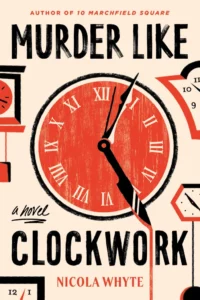
Second in Nicola Whyte’s series featuring the residents of Marchfield Square, Murder Like Clockwork opens with Audrey Brooks, a housecleaner and sometime amateur sleuth cleaning the little-used London mansion of Anton Petrov, a mysterious figure who is a friend of Audrey’s employer and landlord Celeste van Duren. Audrey discovers a corpse in one of the rooms, but by the time the police arrive 20 minutes later, the corpse and all evidence of a bloody murder have disappeared. The police threaten to charge Audrey with wasting police time, and Audrey realizes she’s once again going to have to enlist part-time crime novelist and fellow amateur sleuth Lewis McLennon and her other neighbors to solve the mystery.
Minotaur
Published May 5, 2026
Reviewed by Barbara Fister
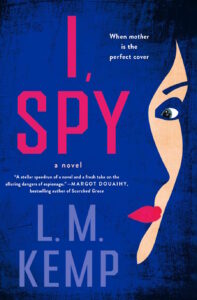
Kendal Carter has left her past life behind her to be a full-time mother for four-year-old Rosie, living a quiet life in Switzerland until the past intrudes. Someone wants her dead, and as she uses all of her skills as an ex-spy, she manages to escape with her daughter to London, where her former employer Rico has a safe house for her. The only catch is she will have to help train a new agent from Canada as he infiltrates a dodgy tech company.
The home is beautiful, the Canadian is charming, and Rosie can go to a nearby school. What could go wrong? Well…
Soho
Published May 5, 2026
Reviewed by Barbara Fister
Hannah Cooke, who goes by Cookie, is an interior decorator with highly-refined tastes and strong opinions about which shade of white is the right one for a particular room. When she isn’t dealing with home renovations, she builds homes of her own, miniature ones, filled with details of past crime scenes. She thinks she has landed a plum job when a wealthy couple hire her to renovate a grand old home, but she soon uncovers a lot of problems: a secret room with strange Egyptian motifs painted on the wall, a crumbling chimney that will be hard to repair, and her clients’ marriage, which is on the rocks. After one of the couple is murdered, a detective on the case asks her to build a miniature of the house she’s been renovating, convinced it will lead to a solution.
Severn House
Published May 5, 2026
Reviewed by Barbara Fister
DCI Bill Slider and his trusty sidekick, the well-dressed DS Jim Atherton, have a case that puts them on the spot. The body found in a disused canal in a bleak and neglected industrial area turns out to be that of a police constable. Someone had bludgeoned him to death, then moved the body to a place it might go undetected, except for a dog walker and enough silt in the canal to prevent the corpse from sinking out of sight. Nobody seems to know the deceased constable well, but whenever someone on the Job is killed, pressure is on.
Harper Perennial
Published May 5, 2026
Reviewed by Barbara Fister
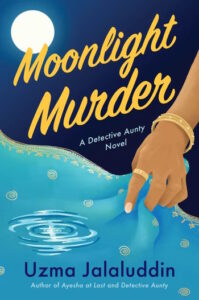
In the second volume of the “Detective Aunty” series, Kausar Khan has moved back to the Golden Crescent neighborhood of Toronto to be closer to her daughter and granddaughters. She has filled a closet of her new unfurnished apartment with boxes of records from her son’s hit-and-run death some two decades ago, a death that had sent her into a tailspin of depression. Now she feels almost ready to start opening the boxes and begin an investigation into what really happened that night, but first her granddaughter comes to her with a more recent mystery. A boy at her school has been found dead in a local pond, after an overdose. The authorities think it’s a suicide, but Maleeha is convinced he would not kill himself. Nor would he take drugs. Something suspicious led to the death, and she wants her grandmother, who has already earned a reputation as a sleuth, to find out what really happened.
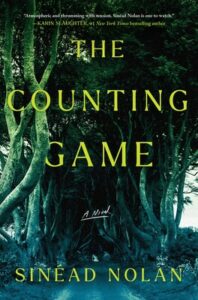
Young Jack Kellough goes into the forest that looms beside a small Irish village with his older sister Saoirse to play a variation on hide-and-seek: the Counting Game. If the one who hides isn’t found after the seeker counts to ten, it’s a test. They will never be found. That day, he can’t find his sister, and when the police are called the next day, he can’t tell them what he saw out in the woods. They call in a psychologist, Freya Hemmings, to see if she can coax something out of him.
Minotaur
Published May 5, 2026
Reviewed by Julie Campbell
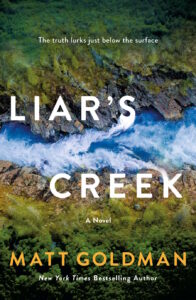
After a career playing soccer in Europe, Clay returns to his small hometown in Minnesota, where he grew up with a father who was more interested in being sheriff than being a dad. But Judd is interested in being grandfather to Clay’s 12 year old son, Braedon, and they arrive at an uneasy peace. Until Judd’s ne’er-do-well twin brother, Teddy, goes missing.
Crime Fiction Review is now a year old. We started this site to fill a gap left when Reviewing the Evidence closed its digital doors after a quarter of a century and thousands of reviews. While we’re far from being a true replacement, we strive to uphold the same tradition of reviewing a wide range of crime fiction independently and honestly. These days influencers promote books in a way that blends readerly enthusiasm with advertising. Maybe there’s nothing wrong with that, but it’s not what we do. We simply want to share our love of the genre in a way that will help readers find books they might enjoy (and perhaps from time to time to steer them away from ones we think they won’t).
We’re pleased to have two reviewers added to our roster. Rebecca Nesvet, formerly an editor at Reviewing the Evidence, join us this month with a review of one of our favorites from last year. Julie Campbell, a long-time crime fiction reader, brings us a review of the first in a new series from one of her favorite authors.
We’re saddened to mark this anniversary of our review site with news of Yvonne Klein’s passing at the end of March at age 92. For many years she brought her sharp wit and high standards to the work of reviewing books. As you can tell from her obituary, she led a full and fascinating life that included being an award-winning translator of fiction, a professor of English, and a lifelong feminist activist. We are honored to have known her, if only for many of us in her role as the editor of Reviewing the Evidence and a fellow lover of the genre.
Here’s what we read and reviewed in April, with Mary-Jane’s cat making a return visit to head them up, given her striking resemblance to Reviewing the Evidence’s longtime mascot, Smokey.
Taylor Brown, Wolvers– “The Gila Wilderness is … vividly described in all its rugged, dangerous beauty. While the story is a propulsive one of hunting and survival, the language the author uses is as compelling.” Barbara Fister
Simon Brett, A Disorganized Death – “…what is primarily rather a cozy-esque puzzle mystery has some disturbing depths. But the main plot line is mostly a light adventure as Ellen questions witnesses and uncovers some surprising truths. Ellen is smart and insightful, which makes her fun to follow.” Meredith Frazier
Ed Lin, The Dead Can’t Make a Living– “The night market is a fascinating setting, and the descriptions of food are guaranteed to make readers hungry. Though the series is quite cozy, Ed Lin addresses serious topics with a light touch.” Barbara Fister
C. L. Miller, Murder at the Castle– “Although there’s a fairly small cast of characters and an Agatha Christie-like reveal in a drawing room while the suspects are trapped by a blizzard giving the story the familiarity of a cozy, the plot is convoluted enough to keep the reader guessing right to the end. And while the novel is primarily plot-driven, the recurring main characters are given enough depth that they’re worth spending time with.” Meredith Frazier
Allison Winn Scotch, The Insomniacs– “The story unfolds from four points of view, with each character growing deeper and more complex as the reader pieces things together and as the group’s connections grow stronger. This is very much a character-driven novel, but also well-plotted as the search for answers accelerates.” Barbara Fister
Spencer Quinn, Cat on a Hot Tin Woof – “Each novel stands alone as a clever, quick-witted detective story narrated by Chet, the canine half of the partnership known as the Little Detective Agency. (The human half is Bernie Little, a tough talking, hard-hitting, big-hearted West Point graduate and decorated combat veteran.)…Old fans and new readers can consider themselves lucky to have this latest installment.” Mary-Jane Oltarzewski
Jane Harper, Last One Out – “… an effective and affecting story that, once again, makes the Australian landscape a vivid character of its own. Last One Out is a fine addition to Harper’s literary atlas of a fascinating and varied country.” Barbara Fister
Jennifer N. Brown, The Lost Book of Elizabeth Barton– “Elizabeth Barton and her world are thoroughly captured, as are Alison Sage and the world of academia. But don’t be put off by the academic qualifications—this is a very readable work of fiction, in spite of the real historical events it imagines and portrays so well.” Meredith Frazier
Wolf Haas, Short Circuit– “What starts out as a humorous yet somewhat arid metafiction, with characters who are barely sketched in, grows increasingly warm, human, and engaging. It feels as if the books the two main characters are reading are coming to life, animating the shared story.” Barbara Fister
Marcie R. Rendon, Broken Fields– “As the series continues, Cash’s investigative victories pile up but she doesn’t really gain power in her limited post-colonial farmtown world. The series is riveting while never promising the reader–or Cash herself–more than reality can deliver.” Rebecca Nesvet
Alan Parks, Gunner– “What Parks does best, in this series and the previous one, is to evoke the time and place. Midnight air raids, prisoner of war camps, and the grit and hustle of a populace that refuses to buckle.” Julie Campbell
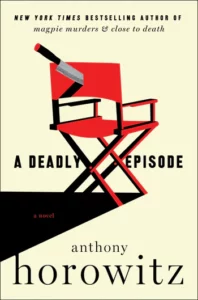
Anthony Horowitz, A Deadly Episode– “Written as though it’s lifted from Horowitz’s own life (and there’s more than a bit of a sense that it could be), the novel mingles fact and fiction into a metafictional tale that’s a great deal of fun to follow. And it’s a good mystery, too. In fact, it’s two good mysteries in one.” Meredith Frazier
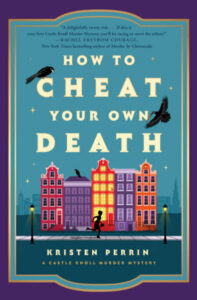
Kristen Perrin, How to Cheat Your Own Death– “The two story lines twist and circle one another and both involve murders that seem to be somehow related. In both timelines, Annie and Frances work through the available clues aided by men with whom they are in complicated relationships that are ambiguously romantic… It’s all cleverly complex as murders are solved and the puzzling fortune’s meaning is worked out, with a revelation in the end that predicts a future episode for Frances and Annie.” Barbara Fister
In the third entry in the Castle Knoll Files series, Annie Adams gets a call from her mother, a renowned artist who is working on a new series of paintings, abstracts that evoke the mysteries of the anatomical human heart – resonant with a prediction made by a fortune teller that Annie has been mulling over. Her mother is rattled. Something gruesome has been left on the front steps; did a cat leave the remains of its prey there, or is it a message of some kind? Annie travels to London to look at her mother’s new paintings and see whether the icky thing on the front steps is reason to worry. Its threatening message soon becomes clear when Annie finds the body of her mother’s apprentice lying in a skip atop a pile of paintings, a gaping hole in her chest where her heart used to be.
Harper
Published April 28, 2026
Reviewed by Meredith Frazier
A fast, funny, clever read, A Deadly Episode is the latest in Anthony Horowitz’s Hawthorne & Horowitz series. Written as though it’s lifted from Horowitz’s own life (and there’s more than a bit of a sense that it could be), the novel mingles fact and fiction into a metafictional tale that’s a great deal of fun to follow. And it’s a good mystery, too. In fact, it’s two good mysteries in one.
To begin, a production company is making a movie of the first Hawthorne & Horowitz mystery and, as might be expected, tensions run high on the set. Before long, the David Caine, main star, who was portraying Hawthorne, is murdered. Caine had made a lot of enemies on set, but was he murdered for his own actions, or was Hawthorne himself the actual intended victim? As Hawthorne and Horowitz assist the police in the investigation, they find themselves having to re-investigate Hawthorne’s very first case where he may or may not have made a mistake and accused an innocent man of a crime. Between the two cases, lots of red herrings crop up, interesting side plots ensue, and Horowitz the character wanders off on some trails of his own, only to be reeled back in in the end by Hawthorne’s razor-sharp reasoning.
Because the novel is both plot driven and character driven, it’s a fast read, but there’s enough depth to it to give it some heft. It’s not heavy, though. There’s plenty of humor throughout, and the clever clues and conclusion provide multiple levels of entertainment. If this is your first Hawthorne & Horowitz novel, there’s no need to have read the others—but you’ll want to read them by the time you reach the end.

 Union Square
 Minotaur
 Soho
Soho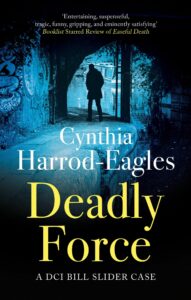 Severn House
 Harper Perennial
 Gallery/Scout Press
 Minotaur
 Harper