
 Minotaur
Published on August 12, 2025
Reviewed by Meredith Frazier
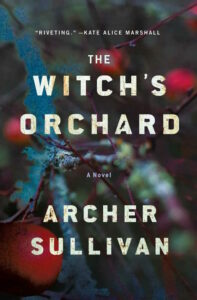
Right from the start of her novel The Witch’s Orchard, Archer Sullivan creates a tangible, sensory world that draws the reader in, then adds a twist that throws everything off balance—exactly the type of thing a mystery-lover is looking for, and something that Sullivan continues all the way through to the final pages.
PI Annie Gore has just pawned her watch (again) so she can pay her most pressing bills when 18-year-old Max shows up with a case. Three young girls disappeared 10 years ago in his small mountain town in North Carolina. One of them was his sister, and Max has been saving money ever since to hire a P.I. to find her. He’s done his research, and he specifically wants Annie to be that P.I. because Annie is an outsider but one who, coming from Appalachia herself, understands mountain people. Annie needs the money, but she’s reluctant to return to Appalachia, and she knows there’s not much hope of finding any new answers a decade after the girls disappeared, but she agrees to give it a week. Twenty-four hours later, Annie has stirred up trouble, met a “witch,” and has begun uncovering lots of uncomfortable secrets. And that’s only the beginning.
Sullivan is a ninth generation Appalachian herself, and it shows in her unflinchingly honest but understanding portrayal of the little mountain town and its inhabitants. There’s deep poverty here, folklore weaves through everyone’s lives, and everyone seems to be struggling to greater or lesser degrees. But there is also a deep ever-present sense of community and humanity, and in the end, it’s both the humanity and the community that are at the center of the mystery, and Sullivan plays that well.
As noted earlier, the sense of setting is strong, and the characters are equally strong. Annie herself has a lot of backstory that Sullivan introduces in snippets that give Annie complexity and depth. And while we learn more of Annie than anyone else, we get to know all the main characters well, in part because Sullivan uses multiple versions of a folktale to reveal character, a device that works well while contributing depth to the plot, too. The plot itself is satisfyingly convoluted and believable, and Sullivan plays fair, laying out clues along with plenty of red herrings and drama. Overall, The Witch’s Orchard is an intriguing, atmospheric novel that doesn’t come across as a page-turning thriller but is, nonetheless, thrilling and hard to put down.