
 Berkley
Published May 6, 2025
Reviewed by Barbara Fister
In Regency England, Lady Augusta Colebrook is on a mission. On two missions, actually. She needs to hide Lady Hester Belford from a vengeful brother who objects to her same-sex relationship and previously had her imprisoned in a horrific asylum. He’s determined to find her and return her to the asylum to preserve the family honor from her taint. Augusta is also determined to clear the name of Lord Evan Belford, Lady Hester’s discredited brother, framed for a crime that sent him to a penal colony in Australia. He’s back in England, a fugitive being hunted by a vicious “thieftaker” who will kill him if he can track him down. Lord Evan is not only a trusted collaborator in her rescue work, she has developed a romantic attraction to him. If she can find out who was responsible for the death that he is unjustly accused of, he might be able to regain his safety and freedom.
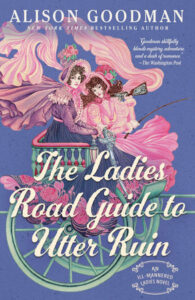
Lady Augusta, Gus to her friends, is still unmarried at the ripe age of 42, and living with her twin sister Julia, who is less impetuous but always an ally in her causes. Between them, and with the aid of Lord Evan, they embark on a series of adventures that bring them face to face with danger and into the darkest cellars of London clubs, where debauched gentry indulge their sadistic tastes, even leading to murder. The book cover is somewhat misleading: this is not as frothy and cute as the pastel picture suggests. Yes, there are undeniably cozy elements, and a certain amount of romance, but it’s mixed with well-depicted historical detail, social commentary, and some violence, all knitted together with humor and a strong feminist bent.
Readers would do well to start with the previous book in this series, as this one jumps headlong into an ongoing story. Though it’s possible to start here, it’s clearly part of a planned whole. The author clearly enjoys dwelling in a historical period, describing women’s gowns and social manners of high society where Augusta and Julia belong, but are oppositional. They are wealthy and well connected to the highest circles of the country, but their adventures put them in contact with prostitutes and the poorest residents of London, offering a panoramic view of the period.
All that said, it’s primarily an adventure, with plucky heroines, dishy heroes, and dastardly villains, featuring many carriage chases, narrow escapes, and daring rescues. Those who grew up reading Joan Aiken’s alternative history Wolves Chronicles will find themselves pleasantly at home.